- 0:00 - Introduction
- 1:05 - Podcast Welcome
- 1:25 - SEO and Early Days
- 3:16 - Overcoming Challenges
- 4:11 - Growth and Brand Building
- 5:33 - The Apple Store Moment
- 6:33 - Media Impact and Growth
- 8:40 - Initiating Ideas and Empathy
- 12:33 - Personal Values and Impact
- 16:05 - Intuition and Risk-Taking
- 18:33 - Transition and Self-Exploration
- 22:48 - Systems and Playbooks
- 32:43 - Networking and Growth
- 43:16 - Reading and Learning
- 44:37 - Conclusion



0:00 - Introduction
Jeremy:
"We basically bought it, stood out the front, got the photo, and we got referenced by over 300 publications globally. At the time we had our website, I think it was around 1,100 odd visits a month. And in 72 hours, we got to 124,000 visits. So it was a crazy growth hack that really just shows what's possible when you can capture a moment."
Kaga:
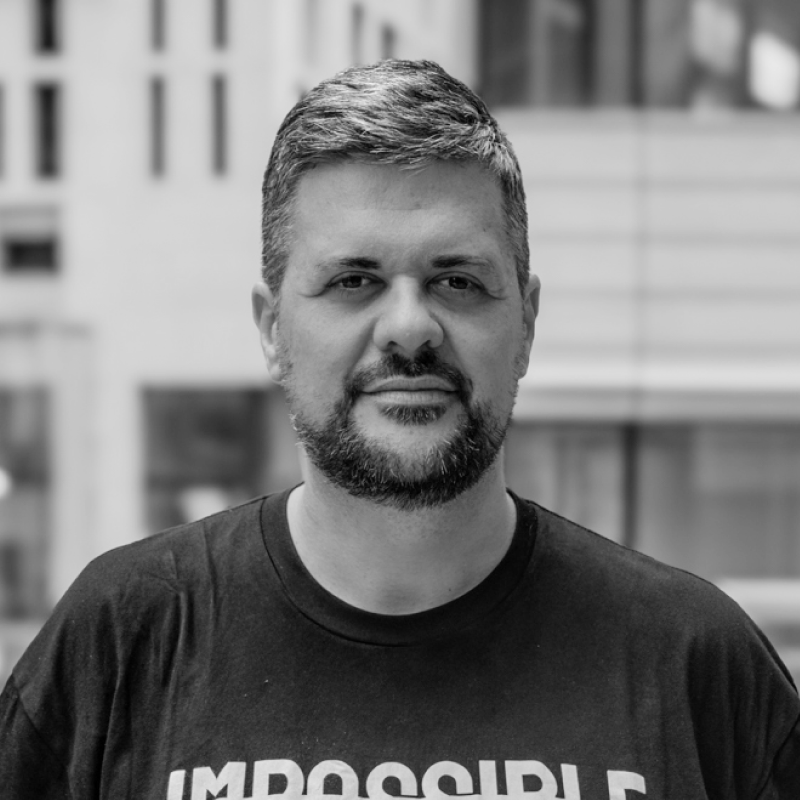
Hello and welcome to Now or Never. A podcast designed to let new founders learn directly from proven founders. It's brought to you by UntilNow. We're a design-led innovation studio that works with startups and scaleups to build breakthrough brands and digital products.
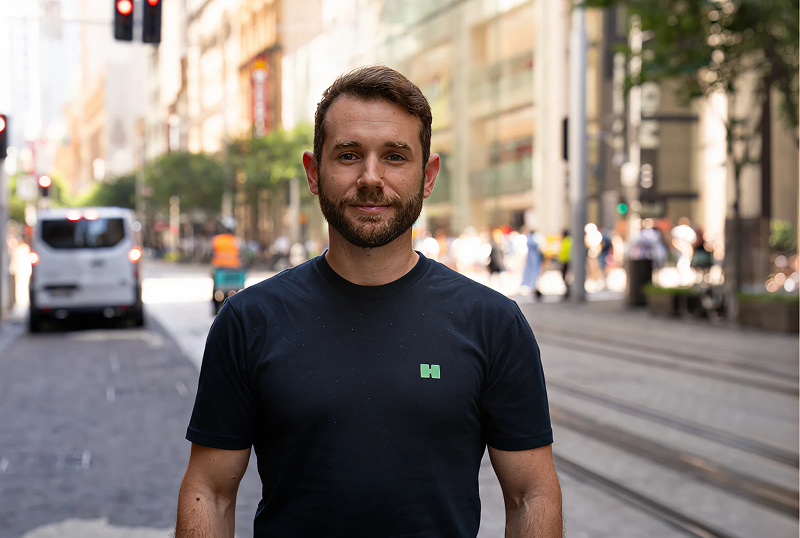
Today's guest is Jeremy Cabral. For the last 25 years Jeremy has been heavily involved in the Sydney technology and startup scene. He's probably most famously understood as being one of the three co-founders that helped bootstrap Finder from nothing to $100+ million globally in revenue. Jeremy is now advising founders and working with companies such as StartMate as well as his own personal consultancy, sharing his insights, giving lessons and laying down playbooks.
1:05 - Podcast Welcome
Jeremy:
Game on. Let's do it.
Kaga:
Okay, Jeremy, nice to have you on board for the podcast today.
Jeremy:
Welcome. Thank you. Great to be here.
Kaga:
There's a ton of stuff for us to talk about. But first off, tell us a little bit about the Finder provenance, the story, the canon, if you will, 100 million revenue bootstrapped. Yeah.
1:25 - SEO and Early Days
Jeremy:
So yeah, from the very beginning, SEO was really critical to us. We had performance marketing backgrounds. And Fred and Frank had three companies, two of which were sold into conglomerate of agencies that got listed. And the third housed a bunch of experiments, of which one was Credit Card Finder. And the idea really was to build out a large website that helped with financial decisions. In this space, specifically credit cards, but yeah, we felt that there wasn't any real significant Australian players. We were benchmarking globally from the very beginning. We even own creditcardfind.co.uk, it's like another random thing. And yeah, I just met the guys and really loved the ambition. And for me, I felt like I academically understood a lot about SEO. I'd been working building websites for probably eight or nine years at that point, and so I started pretty young.
And yeah, I just wanted to test myself in the most competitive game possible. I loved financial comparison as a concept because you're going up against big banks, well-funded, and kind of traditional finance people, which I felt were pretty easy competition. Yeah, off we went and kind of kicked it off and just really from the beginning had a strategy of invest a dollar and make two. It was like a very basic kind of way of doing things. And that's the bootstrapping journey. We had a $2,000 a month budget and we would just spend every single dollar very carefully and suddenly it's a $4,000 and then $10,000 a month budget and yeah, next minute, it's millions and millions of dollars.
So this was 2005? So the group of experiments, I think there was an entity registered in 2006. Credit card finding started getting more serious around 08. And I joined early 09. So at the time, the website was penalized by Google and I was there to fix that up.
3:16 - Overcoming Challenges
Jeremy:
Did that within a couple of weeks, which was cool. And then, you know, joined and got some equity in the company and off we went. So it was really still like, we look back now, that that was Greenfield, early days in terms of SEO. You could generate a lot of value back then disproportionately. So put one in, get $2 out.
Kaga:
Bootstrapping the entire time for how long?
Jeremy:
Through until December 2021, where we were at is 30 mil at a 680 mil post-money valuation.
Kaga:
My math says terrible. Was that like a 30 times fall?
Jeremy:
Yeah, was a pretty significant valuation for the time. I think our lawyer said it was like probably one of the top few in terms of a company that kind of first raised to hit that sort of valuation. I think he kind of compared it to Atlassian and a couple of others. Yeah, pretty cool.
Kaga:
Yeah, I think there's probably a few founders watching this sort of buckling at the knees because that's... I mean, when did you turn the corner on that company?
Jeremy:
Say it was around 2009.
4:11 - Growth and Brand Building
Kaga:
Couple of years since the iPhone came out. Like, these early days, they feel like now. And then, how close, where did you really start getting traction at that stage?
Jeremy:
Like yeah, I'd say, I mean, daily. It was bumpy though, like we were pushing the boundaries on a whole bunch of things. And so you'd have enormous growth and then go to, not zero, like you know, pull back pretty quickly. This Google penalty issue was something that was recurring.
And then, yeah, I'd say like around 2012, we really made the commitment to become a brand and kind of distance ourselves from the pack and do things in a way that we felt would be just taking us to be a national brand and kind of the destination to do all this sort of stuff in Australia. So we started expanding well beyond just credit cards, going to all the other categories, eventually insurance and so on. Had the brand in 2015, because we actually ran all these subdomains, separate brands. So the credit card finder, savings account finder rolled up into the one domain and then went global under finder.com eventually.
Kaga:
Yeah. And was this around the time where that famous Apple store moment took place?
Jeremy:
Yeah, I think there would have been an iPhone 5 launch, so we're talking somewhere between 2013 and 2015 thereabouts. So there's a funny story there. So it's in this pattern and it's pretty obvious that every single iPhone launch had this line. I think still today people line up and it's a bit crazy. But we were launching a mobile plan comparison.
5:33 - The Apple Store Moment
Jeremy:
I was walking past the Apple store and I saw that there wasn't a line and it was three days out from the launch. I was like, this is pretty interesting. And I had the idea on the spot to start the line. So I walked inside the store and told the Apple crew, like, hey, I'm gonna start the line. They pull out the thing and then it just began.
I remember calling up the office and like, hey guys, I need a chair because I just started this Apple line for the iPhone 5. We need to create a plan as well. We didn't have much of a plan to be honest. I remember that first night was absolutely brutal. It was a pretty cold night. We were like literally sat there on these chairs just trying to sleep I guess and it was a bit crazy.
But yeah, the whole idea then was really how do you capture a moment and it was like a trend jacking opportunity where, you know, we're launching mobile phone plan comparison and how do we be the kind of center of attention. And the simulation I always run is like kind of, if I was a journalist, this kind of thing's happening, like what's the story that's gonna be written, how do we be the story? And buying the first iPhone 5 was like giving us control at that moment.
6:33 - Media Impact and Growth
Jeremy:
We basically bought it, stood out the front, got the photo, and we got referenced by over 300 publications globally. At the time we had our website, I think it was around 1,100 odd visits a month. And in 72 hours, we got to 124,000 visits. So it was a crazy growth hack that really just shows what's possible when you can capture a moment.
Kaga:
Yeah, and I think that the terminology that media agencies and advertising agencies use is that that's earned media, right? Like you've gone out and you've earned it and you can put a value on that. You can say how much would that have comparatively cost if I'd gone out running the ad campaigns, buying the billboards, buying the share of voice on radio. So I think it's a good example of thinking opportunistically about where you want to both position your brand, but also, like you said, hijack a trend and then be able to just put a logo in front of it and just drive traffic.
Jeremy:
And it's interesting because I don't think we ever stopped trend jacking basically as a company. It was almost like a key pillar towards our growth. And to be honest, we even started manufacturing moments as well.
There's a Ray Gun thing that played out. I think it was like Halloween, not last year, the year before. The Olympic breakdance? Yeah, like that kangaroo thing and whatever. And the team were talking about doing a TV ad and having her be on the ad and I was like, cool. You know, we're going to have her on there and like, you know, our tagline, find better or do better. In essence, people thought they could dance better than Ray Gun. And so my idea was like to really send it, was let's do a competition and, you know, let people prove that they can. And so it was a viral mechanism.
Effectively, that really took off. I think Ray Gun at the time was kind of like, you know, on the other side of all that. And then kind of this became like a huge reopening of her brand. We got really insane, like literally everyone was producing these videos everywhere and ended up on the NFL, like with this NFL player doing the kangaroo thing. So yeah, we just did that forever and ever and ever. Like just manufacture these moments where probably from 2009 onwards I can just remember distinct stories of leveraging this playbook to grow the company.
8:40 - Initiating Ideas and Empathy
Kaga:
Where does that come from? In terms of like, what triggers that? I'm assuming you are like the initiator of like most of those ideas with the team.
Jeremy:
Yeah, certainly myself and Fred. So I can think of the earliest one I did which was 2009. I saw a Google engineer, Matt Cutts, had spoken about Lifehacker being a great website to get a link from. I was like, cool. This was probably April or thereabouts 2009.
I used to work in the merchandise game. My parents' company sells merchandise. And my idea was, again, it's always psychology behind it, like running the simulation and kind of understanding how people might perceive something or respond to what you're doing. And I think it plays, it's from a place of empathy, first and foremost, for others.
But yeah, I think, you know, what I did in that moment was pretty unusual, which is why I got the results. So I decided to get a carton of beer with custom labels on it, which was based with the Lifehacker logo. And at the top it said, I remember the tagline was the source of productivity, like I just made that up. Then at the top had creditcardfinder.com.au slash lifehacker. And it was basically a virtual launch of creditcardfinder. And said, you know, dear Angus, and I sent the beer over to their office. I knew that journos were probably gonna have a drink on a Friday afternoon, so I made it land around then. Made sure I booked it with a courier so I'd know it'd arrive at an exact moment when it's signed for, it's there.
And yeah, I reached out to Angus and he responded saying, yeah, thanks for the beer, whatever. But on this URL was creditcardfinder.com.au slash lifehacker and it was just me announcing our launch in Australia. And he also had an article on there which was like say eight personal finance tips or something like that I'm pretty sure. He saw the article and he thought it was rubbish. He's like sorry we're not gonna run this article on Lifehacker. I was like no problems man, that's cool to me. Like we at least have a coffee. And so he agreed to that.
And I remember I was in the taxi on the way to go catch up with him in Harborside which is a shopping center which no longer exists now. And on the way my RSS reader, that's how old it is that we're talking about, I get pinged showing that creditcardfinder.com.au has launched in Australia, the story from Lifehacker.
And I think the reason behind that is like if you are sitting across from someone and you've got the ability to help them, and I'm about to meet with this person, he knows how much he could help my company, startup, it's hard for him to not do something. If I'm like, you know, got his attention, he thinks I'm interesting and different in whatever capacity, and I think he just wanted to show some support. But like that moment was like where I realized actually like what you can do if you start really thinking about things in a way that, yeah, from a place of empathy.
I've always had this concept of like, as a Google engineer, what would I think? As a journalist, what would I think? How would I respond to what I'm doing here? As a customer, how would I, if I read this thing, would I be a net promoter of Finder, or not? And I think that psychology's always really been a key. I've never formally studied it, but as I said, I think from a place of empathy, I've always really cared about how something I'm doing will be received by somebody else. And yeah, for me, it was just about that. And we just did it every year since, every month since.
Kaga:
I completely agree. I think that it's, you know, we speak with founders all the time, subject matter experts. They understand the domain. They've often come from a period where they themselves have had the drama or the problem. They've experienced it firsthand. But then there's often a gulf between expressing that out because they just assume that everyone has that problem. But that's an empathy deficit, I think. So do you find, I mean, that's a personal trait and a talent that I think you have in being able to identify that. Have you noticed that capability in other founders or is it something that you talk about when you advise others?
Jeremy:
Yeah, look, I am. But I spoke about it at StartMate on Monday or Tuesday when I was there. Yeah, I think I do go to extreme lengths to help people. I'm driven by that actually as a value. I've got three values, connection, growth, and helping people. And so it comes from deep within.
12:33 - Personal Values and Impact
Jeremy:
I think the reason for that was like, you know, at a young age, I remember my grandmother, who I was really close to, used to help with absolutely everything except on the health side of things, I just left that to the rest of my family to do that. I was too young, didn't drive, whatever. And then she had a heart attack and I felt upset by that because I later found out that her doctor was trying to convince her to take this medication and she was refusing to do it. Her doctor was away for a few months, obviously, and that's when she had this heart attack. I was like, man, if I knew that, I would have been able to tell my grandmother to do this. And who knows, she could still be with us today.
And yeah, I think that really impacted me in a huge way. And it just played forward in this massive butterfly effect through my life where the way I manage people, the way I kind of seek to better understand them is driven from this. I think in business where I was thinking about this kind of Venn diagram. It's like, you know, what does somebody else need and want and what do you need and want? And if you get this perfect overlap, that's like complete satisfaction for both parties. And I think that's just applicable as a universal framework to anything, whether it be like you wanting to get media, you wanting to hire someone, retain someone. Literally, if it's just a good principle for life, just seeking to have a win-win for both parties, I think is just really, really important.
Kaga:
It's funny how simple it sounds, yet how profound that actually is, because I think it's mired in interpretation, presupposition, our own psychology. But when really it's quite simple. I've been seeing some stuff recently about the complex geopolitical environment we're in and like some Chinese speakers saying it's very simple, you need to work towards not who's your friend, who did this or who did that or drama, but actually go, what's in that for me, in my interest, what's in that for your interest and how can we meet to make that. I mean it's incredibly pragmatic but we all seem to get that wrong, don't we?
Jeremy:
Yeah, no, definitely. I think, man, it's amazing. I went on this journey in the last 12 months actually around the word selfish. And I think that being selfish is actually a really positive thing. From prioritizing yourself, you can really help others and be selfless. So self-care, self-awareness, all these really important concepts stem off the word self. And I think that, yeah, the more giving you are, the more generous the universe can be in return. And it's actually, it sometimes feels like a coincidence, but it is literally just a logical kind of chain of events that occurs.
And yeah, you never know when these kind of moments come back to help you. Like I remember going back to that Lifehacker story with that link, I think five or six years later, I end up hiring Angus as my editor in chief. We hung out as mates for like every three months for years. Then eventually I needed to hire the best person in the country and he was the guy. And yeah, it's like, I think playing a long game really, really matters.
Kaga:
Yeah, I think we've gone profoundly deep, I think it's actually really insightful because you seem to me, as someone who's sort of watched a little bit of your journey and now getting the opportunity to talk together, you are not placing crystals around the windows and hoping for things to fall spiritually. You're very much a data-driven guy.
Jeremy:
Yeah, totally.
Kaga:
So you think that this also must resound and come back statistically. This is something like, you quantify the output you do, you make sure that these interactions, generally, they're hitting some sort of bar of, I give something to this person, can I do something good? But ultimately, being a man of numbers, you think that that's also in everyone's best interest, right? That comes back.
Jeremy:
100% man, it is a weird tension because yeah, I think that numbers can get you most of the way, maybe 70%, but then you really gotta back yourself and have good intuition.
16:05 - Intuition and Risk-Taking
Jeremy:
Know when to take risks and when not to. And yeah, that's also, I think, something that's really led to the story of Finder. I think you could logic your way to maybe a certain amount of revenue. But I remember the things that really drove us the most were like, imagine if we got to $100,000 a month of revenue. That's insane, no way. And we're hitting 20, 30K at the time. But then you set the ambition, and if you focus on the inputs, I think this is the key, is doing inputs scalably and in a way that, again using the simulation, you go like there's no way a competitor would go to the extremes that I am right now. It's just zero chance. So the likelihood of them exceeding on this input is nil. And if it's the right input and you've invented into that variable in such a way that you have an unfair advantage, the results will come. And so, you know, it's then less about kind of thinking about the result and it's more about building a culture of execution where you make it extremely fun to smash that input and get the result. And it's just gonna happen. And literally I think that's what we did forever. Just kept raising the bar.
It's like imagine a million visitors a month to the Finder website. I'm like, nah, that's insane. And I remember the moment specifically because years prior, and I can't remember exactly the timeline, probably like three years apart between setting the goal and actually hitting it. We had this moment where the entire website had been penalized and for three months straight, like no traffic. The story's well documented, so I won't go deep into it, but effectively got us out of that penalty, which is huge. But it was a moment in time where we just kind of drew a line in the sand. It's like, we're never gonna game this algorithm ever again, and we're gonna do it the hard way, scalably. That was like, really, the hard way, scalably.
And I remember buying this samurai sword and scribing the sword, I'll butcher the quote, but effectively it's what they put on the Medal of Honor in military, essentially. And for me, on eBay, literally bought this thing, paid for the inscription, whatever. And then it arrives in the mail in this tube. I was like, this is insane. Literally, the samurai sword just came in the post. And it used to just sit under my desk as well, like, very, very risky.
But yeah, a few years later, we ended up cutting this cake, celebrating a million visits to the website using the samurai sword. But yeah, it just came by setting this goal, which was partly logical, partly relying on an energy of just leaning to possibility, I guess, and that's really what happened for us.
Kaga:
Yeah, I think I'm 100% in agreement with this because I think there's only so far, data and numbers can take you.
18:33 - Transition and Self-Exploration
Kaga:
The energy in the chat you have around intuition, that's still the supercomputer. That's still your brain, your gut, your taste, your experience, the life that's led you to that point to make a decision between A and B. It's a remarkable journey. So now you're no longer at Finder, right? So you are now advising.
Jeremy:
Yeah, so... I mentioned that journey around really exploring self and went deep. Such a random thing, went to this punk concert, really impacted by that moment, went to a whole bunch of punk concerts over the next few weeks and just...
Kaga:
Hold on, hold on. Why did you go to punk concerts? You said you were very busy.
Jeremy:
It wasn't even on purpose. I was at this dinner, friend of mine, Taron Williams and Chris as well, they run this thing called Season Opener. And she invited me along. She was actually looking for a magazine subscription to Vogue US and couldn't find it. And I'm like, I'm the finder guy, right? So I found it. She gets it. She's like, that was amazing. I've been looking, trying to subscribe for months. And she invited me to this Season Opener dinner.
Tim from Uke was speaking that day, actually. Great exit. Well done, Tim, recently. And you know, I had actually met him a couple of weeks before he started Uke. So to see his journey has been wild. Anyways, watching him speak, he was sat across from me and there was a space next to me. I didn't know who was sitting there but at the end of the night this guy comes across, sat down, was like ex Afterpay, he's now at Airwall X. He's like, man, sorry we didn't get to hang tonight but I've actually got to go, I'm going to this concert. I was like cool, what's the concert? And he goes, you'll never know the band, don't worry about it. I was like no man, just tell me.
And he tells me the band. It was like dude, that was like my favorite band growing up, like literally one of two or three top bands. Less Than Jake, which nobody knows this band. And so I was like, he's like, man, you should come with me. I was like, are you serious? He's got to go now. And I bought a ticket, went with him and had the most awesome time. And yeah, like we just went out to another couple of concerts after that.
Kaga:
And there was like the moment where you said something clicked.
Jeremy:
Straight after that I went to a 10-day water-only fast and it was like pretty insane. And I was tapping into this like... I don't know if you guys ever tried a water-only fast but after a certain point your focus and clarity becomes so insane. I can't describe it. I wish I could fast all the time, but obviously you just can't.
And yeah, just really thought about my future. And I think for me, just felt that with this whole AI era, I need to be a part of it because not only for myself, I think my kind of best work has always been at the front of all these kind of fast changes, like I've always been just ahead of it. And I felt I needed to be really with capacity to do that. Also for Finder, I think that for me, I'm still a shareholder of the company, still support in a number of ways, but mostly the strategic side of things. And I just felt I could bring back a lot of value by kind of having the space to really explore things. So yeah, ultimately decided to go on that journey.
And now on the other side of it, having kind of created this problem for myself, which was unexpected. I ran this marathon, dropped a bunch of weight, and I was posting on LinkedIn. And then I posted about me leaving Finder. And the operational role obviously wrapped up and got a whole bunch of attention and then all these people started reaching out and I was like, man, I don't know what to do here. It was actually really overwhelming.
And decided to try and help as many companies as possible with like a one to many model, which is kind of my goal. And so I was already mentoring at StartMate. They asked me to come back and talk about growth and I did. And then they asked again, like, hey, do you mind mentoring a bunch of these startups afterwards? And so got a bunch of them into a group of about 10 businesses and worked with them for about six weeks. That was like meant to be the official time period, but then I never let go of that group and we still WhatsApp every other day.
But yeah, my intention really is to try and share the playbooks on how I kind of got to the success in Finder, but also by having the luxury of being out there and able to rapidly learn at a time where there's a lot of things changing, I think I can really be a great soundboard to a lot of founders and share what I'm seeing out there, which is pretty wild.
Kaga:
Absolutely. There was something I'm going to note about here because I think doing the research and listening about your journey, you have a thing about systems. You're talking about playbooks, but that might be the same thing. But you have this sort of position on putting systems in.
22:48 - Systems and Playbooks
Kaga:
We get founders who listen to this, and a big part of this podcast is founders looking for insight from successful founders such as yourself. What are systems as you see them and, for let's say early stage or startup founders, how do you typically approach that for them?
Jeremy:
Yeah, the way I think about it is like, if you're a founder, you've probably got a few things right. You've probably got a good idea. That's never the issue, the idea. I think you're probably passionate about that thing and want to solve it. And perhaps you've got some sort of insight in how to do it differently to others.
And that's fine. I think the real challenge I see is that people struggle with getting traction, even if they've got this incredible idea. And often, I think the thing that gets in the way of founders themselves is overthinking a launch and really overcomplicating something. It's kind of two choices really in some of these moments. It's like, you're gonna do it incrementally or you're gonna wait for perfect. And I'm a guy that's like doing it incrementally. That's not the right way, right, for everybody. But like for me, I'm very data led and I iterate as I learn. And so I kind of try and encourage people to launch more quickly, you know, test because it's not the end of the world if you get it wrong.
So for me, it's a system of identifying these variables first and foremost that lead to the success for your company. And, you know, that's kind of a really broad concept, but that could be for a specific channel, like what are the things that are considered when it comes to say ranking in Google, or in sales, what matters. And, you know, say in sales, talk about your number of kind of outreaches per day, like the number of booked calls, the close rate on that, whatever, and it's just a funnel. And so that's the same universal playbook for everybody, and that's cool.
So then in my mind, it's like every company's probably gonna have the same flywheel, the same system in place. And then the key is this: how do you invent into that flywheel, into one of the variables to have an execution that outperforms your competitor? Because that's ultimately how it works. It's like, you need to outperform in one of the variables to take market share.
So what I do is I think about that and I'm like, okay, cool. We're talking about links and link building. A lot of people go and buy links. That's the easy, crappy way to do it. And Google says you shouldn't. And that still is a default. I'm still trying to find SEO agencies that don't buy links. It's crazy. And so the hardest thing to do is earn a link.
Kaga:
To earn a link from. Because obviously like the mobile listeners and also ourselves, we don't really know what you mean by that.
Jeremy:
So the way Google's algorithm works is this. Larry Page, one of the founders, created something called PageRank. And it's effectively a voting mechanism between websites on the internet, pages on the internet. If my website links to your website, it's like a vote for your website. And if it's ideally from a relevant topic, it positively rewards your website and increases its chances of performing in search results. That's like the fundamental.
So you kind of have high quality content, some links, good technical foundations, and that gets you most of the way down the road for SEO. And so you're in a situation where everybody needs to get links, the easiest thing to do is just pay for them, and the hardest thing to do is to earn them. The best type of links are from websites that you can't pay for links from. So if you go and ask AFR, like hey, can I get a link to my website in your next article and I'm happy to pay whatever you want, you just can't. But you can call these random bloggers on the internet and they probably aren't just selling to you, they're selling to multiple different websites who become a part of this pattern, which becomes a part of the thing that Google's engineers are trying to design to stop working essentially.
Yeah, for me it's like you need to invent into that variable. So it's like, we're trying to get links.
Kaga:
Do you think it's still true nowadays with AI?
Jeremy:
Well, if you think about it, AI's got citations still and it has to use trusted sources to be able to generate an answer. The most trusted sources are probably written articles from journalists where they have journalistic standards. So I would argue that there's going to be all these changes in technology over time and whatever, but the thing that's proven true forever is like, if you have a journalist writing about a thing, it's heavily trusted by society. And so that's probably true hundreds of years ago, it's still true today.
And obviously there's lots of publications because of bias and whatever, that's a whole separate topic. But in general, it's a higher standard of editorial than any other type of content that exists. Society relies on journalists being honest and truthful. And so yeah, to do that, the fundamental is that newspapers rely on news. Like that's their core. And to have news, you have to do something new. So therefore, the variable is manufacturing something new repeatedly.
And the variable that I, how I optimized for that was early on in 2009, I came up with this idea to run research because I started seeing this pattern where, kind of similar to the iPhone thing, it's like every year you see people line up, cool. In the media, you read the newspaper, statistics everywhere. So it's like, how can I generate statistics so that I'm in the news all the time?
And we built this survey function that would basically run stories and effectively the goal was to try and raise the importance of the issue that Finder solves. So we talk about how much money people could save if they just did this thing. The more you stress the issue and if you compare, you save X amount of money. So pain, and the relief is Finder, basically. And so that was the playbook.
So doing that is not just, you can do the research, but then they trust that. And again, I think most people don't have patience, but for me, it's like developing relationships with a journalist and trust in you as an individual takes time. And that looks like you having deep empathy for them and going, okay, so what's a journalist need? They don't have many resources. They have stories they need to write each week. They need to make sure that they're not gonna get in trouble because whatever they're doing is inaccurate or whatever. They're time poor. They want to make their job easier.
So it's like all those things. It's like, all right, I would sit down with a journalist, like, hey, what's coming up for you? What do you want to write about in the next couple of weeks? Like, I really want to write this story about something. I'm like, you know what? Why don't I run some research for you? You'll get this exclusivity around this data point that you can use as a headline into your story. That's amazing. Do it. Give them the data. They run the story.
And then you end up in this position where finally, and then they just call you up, whether it be like 6pm on a Friday, like hey, I need to run a story tomorrow, do you think you can give me some stats? And you're like, cool. I remember some of these TV shows would call me up at 11pm on a Friday. And sometimes you'd be out having some fun with friends and you're like, oh yeah, no worries, I'll happily help, go home, run some analysis, end up in the studio at 5am in the morning talking about frequent flyer credit cards or something.
But the variable there is, as a journalist, how responsive is this person when I call them? I'd stop anything to take a call from a journalist. But also thinking about how holistically Google ranks, basically understanding how it works and figuring out a way to connect all the dots to put yourself in that position.
And yeah, I think, you know, again, the pattern, most people want to do SEO. So the default thing is they either try themselves and fail or they pay an SEO agency. So the model with an agency typically is you pay the agency, they kind of go into a sales process, you're convinced to use them, and their goal is to put their most junior staff member on an account so they get more margin. It's a broken model.
So like, you know, I've always been a firm believer in augmenting an in-house team with specialists and, you know, that does look like agencies at times. Not trying to say agencies are the wrong way to work, but I think there's ways of engaging with certain types of agencies and getting really, really clear on what you're trying to do. Yeah, that was my pattern. You just kind of go like that's the simulation. That's how everybody's going to be doing something. So if that's true, then I'm going to zig when others are zagging.
Kaga:
Do you think that model can be applied also to, you know, the founders and the startups you're talking to now? Because obviously Finder is very specific, right? They work quite well because they were like complementaries and things. Are startups the same?
Jeremy:
I think, actually, I almost think they are. It's the weirdest thing. I just got to zoom out. Like, actually look at everything as this universal blueprint for growth.
Kaga:
Interesting.
Jeremy:
They're not the same business. They're not the same industry. They're not the same people. Yeah. But I think the same things are in place. Like there's, you know, for every startup, they all need a case study. They want to be able to put a logo on their conversion funnel, which says as trusted by, or, you know, our customers or whatever. Like it doesn't matter what it is. That's kind of, you know, one thing. So for a startup, they should try and get some design partners on board that can effectively help them kind of validate their product. There's almost no world where putting as seen on like SMH or AFR, whatever, is not gonna improve your conversion rate.
Like every startup has ratings and reviews of their trusted buyer, thousands of people, whatever. It's like the same patterns I just think exist whenever people are in a checkout trying to buy something or they're trying to fill out a form to complete something. So my thought is like how do you as a startup get media attention early?
And it was tiny when it got this media attention. Like, you know, it manufactured this moment. We got Lifehacker to link. So interestingly, Lifehacker was part of, at the time, Allure Media. Allure Media had Gizmodo and all these other kind of tech publications as part of it. So if we can get, you know, Lifehacker and Gizmodo, that's interesting.
And then just use this laddering technique. It's like, okay, so they're highly respected. And then, you know, I'd imagine like the journalists from SMH in the tech column would also go to the same events that the Gizmodo and Lifehacker journalists are at. It's true. And so you can go to that event where you know the SMH journalist is going to be. Like, hey, I just wrote some stuff for the Gizmodo and Lifehacker website recently. Like, that's cool. They're readers of that publication. I'd love to help you with an upcoming story if you're interested. And then you end up on SMH. And then it's like, you know, after that, you're just a snowball effect.
And so I think sometimes the thing is like when we're busy building, we forget that we just sometimes need to be in the room with the other person that has the keys to what we need. And I think that's what I've consistently made sure I've done over the years. Just to be around people in the right moments that had the ability to really make or break something I was trying to do. And more often than not, nearly all the time actually, I'm not seeking that as the primary outcome, but it's like I want a connection. I'll never know when that's gonna be useful to me.
But I think networking is this kind of power move in the sense of being able to have the ability to call someone that you need information from or need help with in any moment. So yeah, long answer, but I think that any startup could leverage these techniques and yeah, they're pretty universal.
32:43 - Networking and Growth
Kaga:
I think it's a really good point. There's a couple of things there. One thing I've heard about like that networking on different levels, I've heard recently a quote saying, I'll paraphrase from a friend but like, the VC is not going to give you any money if you can't already get in front of them. If you can't network your way in front of that VC, they're not going to open an email. So they want to already know that you've got the capability to expand your network, get the monkey bars across, like in your Gizmodo to your Sydney Morning Herald. If you don't know that person at Blackbird or at Y Combinator or whatever, you need to figure out the pattern and figure out how you get to that person because not only does it get you to a raise, it also demonstrates your capability in growing your network and selling your wares, which is critical.
I'm interested just on this topic because I think it's actually important for so many founders, but it's also we're at an inflection point with generative search and that. Do you find all of these things that you've said, it's a universal blueprint for growth? It doesn't really matter what category or what type of startup you're in, but you want to build trust. You're saying there's like reviews. There's also like five star reviews. Sometimes it's Trustpilot, sometimes it's Google. Then you've got as seen in, which is a reference to journalistic integrity. Do you think some of these weigh more for others? Do you think there's blindness to these now? Because we encounter a lot of brands that are always about put the Trustpilot as high as possible. Like, I don't know, I speak for myself. I'm like, does it matter? I feel it dilutes to me, but like how important is that? And what else do you think is sort of cutting through?
Jeremy:
Yeah, I think the issue you're seeing there is a lot of people learn how to game these things, especially Trustpilot and all that sort of stuff. It's like the mechanism is like you send a survey in advance and like hey, how's your experience with my company and if they write yours 10, then you also then show them the Trustpilot straight after. That's how everybody's getting these five star reviews essentially.
So it's like, yeah, and find a new surface area to compete. But I would never be in a world where I didn't want those things. So it's like, yeah, from my standpoint, you just gotta keep innovating. You just gotta keep finding the new kind of bottleneck in your company, whatever it is that you feel is stopping you from making the next leap forwards.
And for me, uniquely, I ran such a huge part of the company. I was across product, tech, design, data science, operations, international expansion, at points in time, people and culture. I think for me, the way I play is like I go, okay, total immersion into a thing, and I'm going to absolutely master this. Literally meet the best people in the world, learn all about it, have a synthesis which I think is unique and then add my own remix to that, bring it back, install it into the company and then move on to the next thing.
And I know that by me moving on, that kind of part of the business would decay over time naturally. It's kind of like without as much kind of push and so on on it. But if you put a good leader in there, hopefully it evolves beyond whatever you could do yourself. But my simulation is that that kind of decays and you need to be able to cycle back through into parts of the business to upgrade it basically. And yeah, so that's the other thing that I think I was probably really good at was just like letting some fires burn because I think that's okay. Like it's like you're gonna focus on another area of the business right now.
And yeah, so for me like I think there's just so many different playbooks. You know, at one point like I went into an M&A streak and it's like we're gonna buy other domains and roll them into Finder. Like let's go and figure out how to do that well. Yeah, they just honestly, like that and so many weird things. But I remember studying matrix organizations, reading three books on matrix organizations, going to the US meeting with this guy from GE, which is like nine levels of matrix.
Kaga:
Meaning it's crazy. Like I just obsessed. What's that?
Jeremy:
Well, just organized organizations where you might have like an individual with multiple reporting lines. And like there's hardline dotted line.
Kaga:
Yeah, exactly, right.
Jeremy:
I went so deep on that topic. But the why was I saw my competitor in the US, Nerd Wallet, had a matrix organization. I was like, hmm, that's interesting. So then I was like, okay, I'm gonna go really hardcore at this. And I basically scraped out their entire job board, all the kind of stuff from LinkedIn, looked at what the org charts looked like prior to moving to matrix, and then looked at it afterwards. Like, oh, that's really interesting. They got this role called BizOps. Started studying the BizOps function, came back to Finder in Sydney, and I was like, we're starting a BizOps function. I'm gonna move to this, set it all up, and introduce it all. And it was like, yeah, that's wild.
Kaga:
I mean, just listening to that makes me fatigued. You know, like the level of attention and insight and I guess perseverance that you can deliver. Did you play nice with the other founders? Were they complementary mindsets? You seem to me to be someone who can really focus, go deep and persist at that for a long time.
Jeremy:
Well, I think Frank is the most persistent of all of us. Like he is unbelievable. Like his focus is unwavering. And that's why I see he's excellent at kind of sticking to a plan and seeing it through. And I think Fred and I, you know, quite innovative and challenge the kind of blueprint. And Frank will grab that blueprint and really run with it and kind of ensure that there's a drum beat in the organization that people know what the metrics are and I think that's key.
I think we, as a trilogy, were really unique. I'd say that Fred was and is an innovator and someone that's really creative, and technical, so it's quite an incredible mix of talents. You know, for Frank, I think that he's very methodical, and he's happy to kind of just hit that kind of same variable over and over again and keep people accountable to that success. And that was phenomenal. It's just a serendipitous mix.
Kaga:
That's like, because when you talk to founders now, you must be looking at like these starry eyed young founders and go, you've got 25% of it, but you're gonna need another, someone else is going to have to bring X. Do you have those conversations with them?
Jeremy:
I do actually. And I share this kind of framework. I remember speaking to this guy. So a pattern of mine is like, you know, if I'm really interested in a book, I attempt to speak to the author, to deeply understand why they wrote the words they wrote. So I was reading this book on relationships actually, and I wanted to understand the logic behind, you know, this author's approach. He was in the Federal Reserve, so an economist retrained as a psychologist. So for whatever reason, it was a really unique way of communicating that really struck a chord with me.
Like he was retired and he agreed to do calls with me at 3:30am in the morning, Sydney time, and it was costing me I think about 500 US a session, it was pretty wild. But I had this information that I really was desperate for.
Anyway, one of the frameworks that kind of left from that few months of working with him was, he said that if somebody is 70% more match in terms of what you're looking for, and he's referring to relationships, that's a great outcome. That's a foundation you can work with. And you should be seeking that other 30% elsewhere. Don't seek perfection in this one relationship. Instead, look to complement. The example I always use, and I think he might have said it too, is like, if your partner's not into rock climbing and extreme sports, that's fine. Go and hang out with your mates and do that.
Kaga:
Or punk rock.
Jeremy:
Yeah, punk rock as well. Yeah, totally. That's a pretty niche thing. And yeah, it was like, that's interesting. It's like seek the need elsewhere, like solve for that need elsewhere. And I think the same is true of any team.
If you can kind of have a situation where somebody can solve for what you need in a way that solves for 70% or more of what you need, then it's like, who do they need around them to really complement and supercharge them. Instead of trying to make sure that the person is 100% of what you need. And that's a dream state. There are literally some people that are close to 100%. But to move quick in an organization, often you have to just realize the fact that it might take too long to find that individual, and instead you need to build a good team around them.
So yeah, when I'm talking to founders, I often refer to this concept and share this story, because I think for me it's like, you could be a great founder and you just don't know how to sell. So solve for that problem. And you know, literally, the numbers, I think it's one of the earliest problems someone needs to solve for as a founder. They might be like really passionate, great at talking about the subject matter, but struggle to say the price or struggle to actually convince somebody to buy it.
Like I was with a founder two days ago and he was telling me how much he is helping all these companies, whatever, and he feels really excited by it all. But he's been working with like three or four companies for like a month or two straight and hasn't sent them the bill yet. I was like, all right, here's a framework for you, man, that I think will work. I was like, why don't you lead with this? I'm like, I really enjoyed working with you. I got so caught up in the passion of what I'm doing together that I really, I forgot about this administrative thing. Here's the invoice. If you could get it set up, that'd be really cool. I really want to get back to focusing on the work. It's like a framing that allows him to kind of lead with the passion and kind of the excitement of what he's doing, gets away with like, you know, throwing in the invoice. A small tactical thing.
But in reality, it's probably a founder that shouldn't be leading the sales motion. But that's a, in reality, you know, it's a solo founder, you have to do all the things. But until that point, that's a little tactic that he can use.
Kaga:
That's it. I think that's probably more common than we'd like to admit, right? Like, you're gonna joke about it in hindsight and talk about, you know, you're doing all this work for free, why would you do that? But it's awkward for some people. That's not the, you know, sales might not be their domain. Like you said, they may not have all the levers pulled, but not everything.
I think what you're saying about relationships and we are coming to the end now, but like do you think, is there a point when you look at people getting another founder to come on board early on, and you and this wonderful sort of rule of the thumb that you got, like sort of aim for 70% of the capability that you need, you're missing, do you also, there must be a point where you look at principles and values too? Because you're getting in the trenches together.
Jeremy:
Absolutely.
Kaga:
Yeah, and is that also just as important or is that something that is more important?
Jeremy:
It's the only thing that matters that you can't break. It's like, without values alignment, I don't think any relationship can work, whether it be professional or personal. For me, it's been the driving force behind every decision. I just have these kind of, as you say, principles and also personal values that I think have really served me well in my life.
And at times, by operating from your values, it may not be the best commercial outcome for yourself, or you might have to say no to something that's a really fantastic opportunity. But you'll never regret that, I think. And for me, that's something that I really live by. I don't want to have any enemies. I never want to have any regrets. I want to be able to proudly describe this moment in time to my daughters one day sitting on my rocking chair. And that's really it. Versus going, man, I really was disappointed with how I did that thing 20, 30 years ago. And yeah, I just think that's the hardest thing for people would be doing things that you just weren't proud of.
43:16 - Reading and Learning
Kaga:
I've got one more question, it's something that I'm curious about. What do you read nowadays? Who do you follow? It sounds like you're constantly adding more information to your process.
Jeremy:
Yeah. So yeah, I'm doing some deep context engineering at the moment, which is why it's a relevant question. So anything I've read, watched, whatever is now being stored as memory for my AI, transcripts, all this sort of stuff, to actually have a lot of visibility of what I've been reading.
I would say that I'm more doing than reading at this point because I think it's the moment in time that requires it. I don't think everything's yet been documented in a way that could serve a moment in time like this. I think it's like a fast mover advantage of like, whether it's like installing OpenCode or doing it yourself. You can read all the guides on it, but I think that the possibility of what you can do with it is really up to your own invention and idea. So I think that's important.
Definitely spending more time, like in terms of reading, a lot more time on Substack, Reddit. When it's something quite niche, I think there's an incentive for somebody to really publish some really high quality content. That's really important. A lot of these platforms are now rewarding publishing long-form articles. X is, LinkedIn is. And so, yeah, I spend a bit of time. It's kind of how I unwind at night, it's just like reading some random X threads or a LinkedIn post or two, so yeah.
Kaga:
Nice, thank you.
44:37 - Conclusion
Kaga:
Yeah, fantastic. Well, I think we can call it there, but it's been incredible to have you come in and tell us both your story, but also just an insight into the way that you operate day to day. It's been really, really insightful. So thanks, Jeremy.
Jeremy:
Thank you. I really appreciate it, guys. I think I've said my story in the way I did today, so I appreciate you guys challenging me and going there. Thank you.
Kaga:
Good. Awesome.